Top trends in AI Automation For B2B you need to know
Wiki Article
The Future of B2B: Using AI Automation to Drive Success
The landscape of B2B is shifting as companies increasingly turn to AI automation for tactical benefit. This improvement guarantees to improve efficiency and customer interaction via innovative innovations. Nonetheless, the assimilation of these tools is not without its obstacles. Comprehending just how services can browse this evolving terrain will be vital for future success. What aspects will determine the efficiency of AI in this sector? The answers may redefine conventional company models.Understanding AI Automation in B2B
As companies increasingly look for effectiveness, comprehending AI automation in B2B comes to be necessary. AI automation describes using expert system innovations to enhance and improve business procedures. In the B2B field, this involves the combination of AI devices to handle tasks such as data analysis, customer communications, and supply chain operations. By leveraging maker understanding and all-natural language processing, companies can improve accuracy, lower human error, and quicken decision-making (Minarik AI). AI automation promotes the handling of large volumes of information, enabling businesses to remove valuable insights and optimize their operations. As companies navigate this technical landscape, an extensive understanding of AI automation's capabilities will certainly empower them to stay responsive and affordable to market needsTrick Benefits of AI Automation for Businesses
While numerous services grapple with enhancing operational demands, AI automation presents numerous advantages that can considerably enhance their performance. One considerable advantage is effectiveness; AI systems can do repeated jobs faster and with higher accuracy than people, consequently freeing and decreasing errors up employees for more tactical campaigns. Additionally, AI automation enables data-driven decision-making by assessing large datasets rapidly, supplying understandings that notify business strategies. Price reduction is one more vital advantage, as automation minimizes labor prices and optimizes source allotment. Additionally, AI can enhance scalability, allowing businesses to adjust to market changes promptly. Eventually, the combination of AI automation cultivates innovation, enabling business to stay affordable in a quickly progressing landscape.Changing Consumer Experiences With AI
AI is improving client experiences by boosting and making it possible for tailored communications engagement. Via the execution of predictive analytics, businesses can expect consumer demands and preferences, leading to much more tailored solutions. Additionally, streamlining support processes with AI innovation boosts performance and contentment, ultimately transforming the total client trip.Personalized Interactions and Interaction
Customized interactions have actually ended up being a cornerstone of efficient customer engagement in the B2B landscape. By leveraging AI-driven solutions, organizations can tailor their communication and offerings to satisfy the unique needs of each customer. Automated systems examine customer information, actions, and preferences, enabling companies to create personalized experiences that resonate with their target market. This level of personalization not just boosts customer satisfaction but additionally cultivates lasting commitment. Furthermore, AI tools facilitate real-time communications, permitting companies to respond immediately and properly to inquiries and feedback. Consequently, business can construct stronger connections with clients, ensuring that their solutions line up with evolving expectations. Ultimately, tailored interaction through AI brings about boosted outcomes and sustained success in the competitive B2B market.Predictive Analytics Execution
As organizations significantly look for to enhance customer experiences, applying predictive analytics has actually emerged as an essential technique in the B2B market. By leveraging data-driven insights, organizations can expect customer needs and preferences, enabling them to tailor their offerings more efficiently. Anticipating analytics utilizes sophisticated algorithms and historic data to anticipate future actions, permitting companies to identify potential challenges and possibilities. This proactive method not just improves client contentment yet also promotes commitment by delivering relevant and prompt services. Additionally, predictive analytics helps in source allocation, guaranteeing that marketing initiatives are concentrated on high-value prospects. Ultimately, the assimilation of predictive analytics gears up B2B firms with the devices required to change client communications and drive lasting success in a significantly competitive landscape.
Simplifying Support Procedures
Enhancing consumer experiences in the B2B sector extends beyond predictive analytics; improving assistance processes plays an important function. By integrating AI-driven remedies, organizations can boost and automate regular questions feedback times, resulting in heightened customer complete satisfaction. Chatbots and online assistants offer 24/7 support, dealing with client requires promptly and reducing the burden on human agents. This automation enables groups to concentrate on intricate problems, promoting even more meaningful communications. In addition, AI devices can evaluate assistance information to determine patterns and locations for improvement, guaranteeing continual enhancement of solution quality. As organizations adopt these modern technologies, they place themselves as customer-centric and responsive, eventually driving loyalty and company development in an increasingly competitive landscape.Simplifying Workflow and Processes
Streamlining operations and processes in B2B atmospheres is necessary for enhancing total effectiveness. By maximizing process efficiency and automating routine jobs, companies can reduce manual errors and liberate useful resources. This shift not only enhances productivity however likewise enables teams to concentrate on tactical initiatives that drive growth.Maximizing Process Performance
Enhancing workflow effectiveness is crucial for services seeking to enhance and decrease functional costs productivity. By assessing existing processes, companies can recognize bottlenecks and redundancies that prevent efficiency. Applying structured procedures boosts communication and cooperation among teams, ensuring that tasks are finished much more promptly. Using data-driven insights makes it possible for business to make informed choices that refine operations even more. In addition, adopting integrated technologies can help with seamless details flow, reducing the threat of mistakes and hold-ups. As services embrace these changes, they not only promote an extra dexterous workplace but also place themselves to react quickly to market needs - Growth Systems For B2B. Eventually, focusing on operations performance enables organizations to designate resources properly, driving lasting success in a significantly competitive landscapeAutomating Regular Jobs
Many companies are progressively transforming to automation to deal with regular jobs, identifying its potential to considerably improve functional effectiveness. By deploying AI-driven remedies, business can streamline recurring activities such as data access, billing processing, and client questions. This change not only lowers human mistake but likewise liberates valuable employee time, permitting personnel to concentrate on value-added tasks and strategic campaigns. Furthermore, automation can improve action times and service consistency, resulting in boosted consumer fulfillment. As companies browse a competitive landscape, leveraging automation for routine tasks becomes vital for keeping and enhancing process dexterity. Eventually, this technique promotes technology and drives development, placing companies for long-lasting success in the progressing B2B setting.Enhancing Decision-Making Through Information Insights
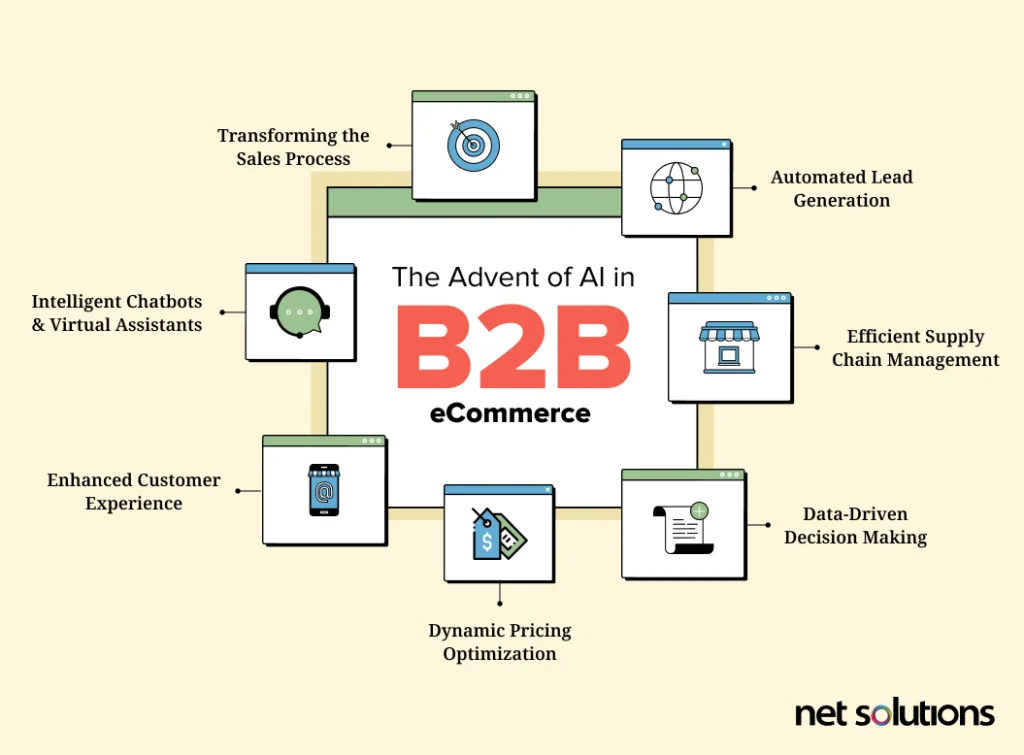
Conquering Obstacles in AI Implementation
AI implementation holds the guarantee of considerable functional renovations, companies commonly encounter a myriad of difficulties that can prevent development. Trick challenges consist of information quality concerns, as many business have problem with insufficient or inconsistent datasets essential for effective AI training. In addition, resistance to alter within the labor force can hinder the adoption of AI technologies, as employees may be afraid task displacement or do not have the essential abilities. Budget plan restraints additionally offer a difficulty, limiting investment in the required infrastructure and skill. Incorporating AI systems with existing procedures can be complicated, requiring significant time and sources. Overcoming these challenges necessitates a tactical approach that includes thorough training, modification management, and a commitment to continual enhancement in AI initiatives.Future Fads: The Following Frontier in B2B Automation
While the landscape of B2B automation remains to advance, arising fads are positioned to redefine how companies run. The assimilation of advanced expert system will promote extra individualized consumer experiences, allowing services to tailor options precisely to customer demands. The rise of anticipating analytics will enable organizations to expect market changes and optimize decision-making procedures. Automation of regular tasks with robot process automation (RPA) will enhance effectiveness, lowering functional costs considerably. Furthermore, the fostering of blockchain technology assures enhanced openness and security in deals. As these advancements gain traction, companies will increasingly leverage AI-driven understandings to promote collaboration, simplify supply chains, and boost general efficiency, noting a transformative shift in the B2B landscape.Often Asked Inquiries
What Kinds Of Businesses Can Profit Many From AI Automation?
Manufacturing, logistics, and customer support organizations can profit most from AI automation. These markets enhance operational efficiency, decrease expenses, and improve client interactions, inevitably causing enhanced performance and success in a competitive market.Just How Can Tiny Businesses Apply AI Automation Efficiently?
Tiny services can implement AI automation properly by recognizing repetitive tasks, selecting straightforward tools, guaranteeing sufficient training for employees, and progressively integrating remedies to maximize process while keeping an eye on efficiency and readjusting techniques based upon feedback.What Are Usual Misconceptions Concerning AI in B2B?
Common mistaken beliefs about AI in B2B consist of the belief that it is just for large business, that it ensures instant results, and that it can totally change human decision-making instead of boosting it. Growth Systems For B2B.How Does AI Automation Influence Staff Member Responsibilities and Job Security?
AI automation reshapes staff member duties by simplifying recurring jobs, promoting efficiency and innovation. While some anxiety task loss, it commonly produces possibilities for upskilling and new settings, inevitably improving work protection via added value and performance.What Skills Are Needed to Take Care Of AI Automation Projects?

As companies increasingly seek effectiveness, understanding AI automation in B2B comes to be essential. AI automation promotes the handling of large quantities of information, allowing organizations to draw out valuable insights and maximize their operations. While numerous companies grapple with boosting functional demands, AI automation provides numerous advantages that can substantially improve their performance. Automation of regular tasks with robotic procedure automation (RPA) will enhance performance, minimizing operational costs substantially. Manufacturing, logistics, and client solution businesses can benefit most from AI automation.
Report this wiki page